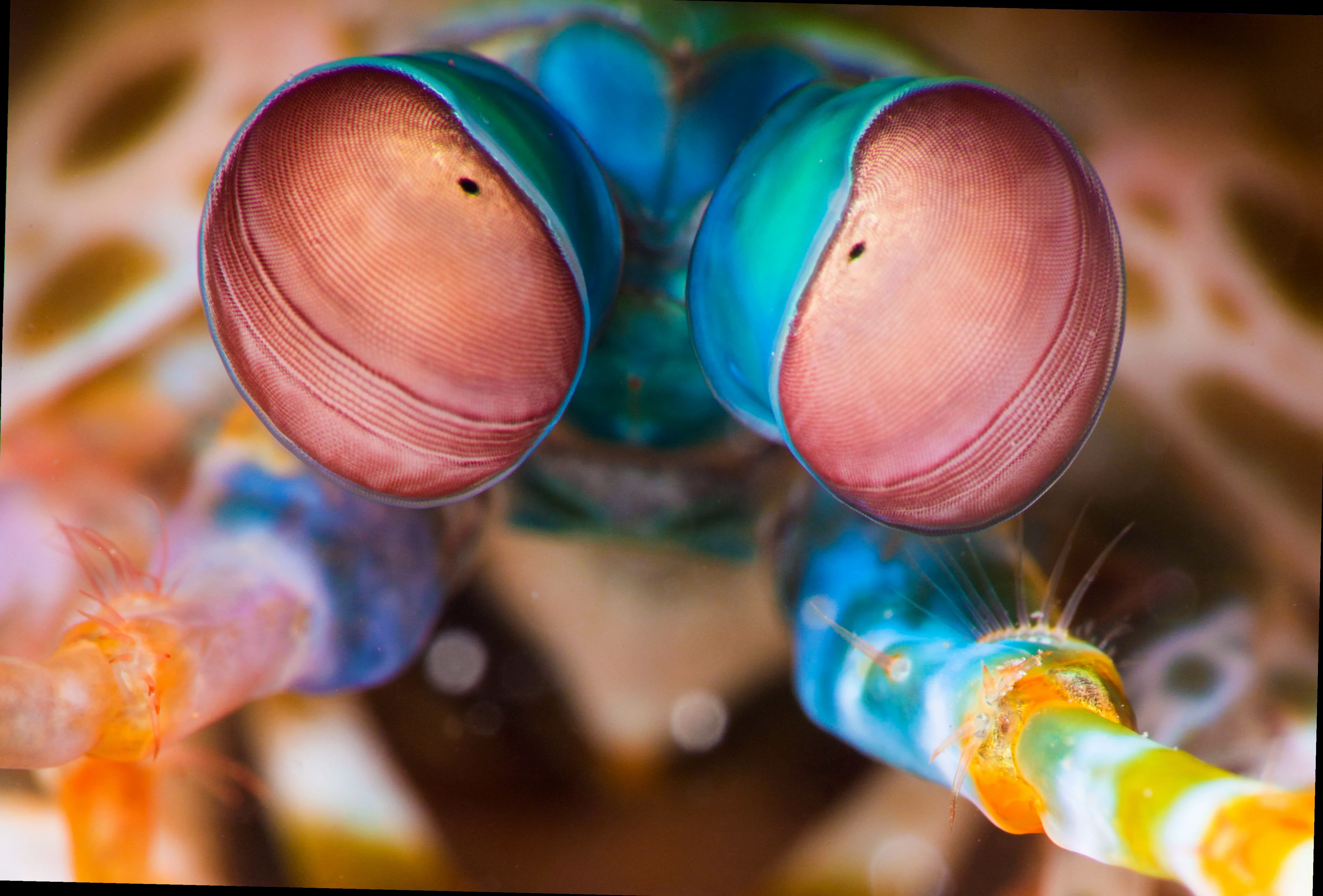
What is Peacock mantis shrimp eye complexity research?
Peacock mantis shrimp eye complexity research is a field dedicated to understanding the intricate structure and function of the visual organs of *Odontodactylus scyllarus*, commonly known as the peacock mantis shrimp. These crustaceans possess some of the most complex eyes known in the animal kingdom, featuring up to 16 photoreceptor types compared to humans' three. This complexity allows them to see a broader range of colors, including ultraviolet and infrared light, and to perceive different forms of polarized light, such as linear and circular polarization.
Key Characteristics Overview
| Characteristic | Details |
|---|---|
| Size | Typically range from 3 to 18 cm (1.2 to 7 inches) in length. |
| Habitat Depth | Found in depths ranging from the surface down to 50 meters (approximately 165 feet), though most commonly observed in shallower reef environments. |
| Location | Native to the Indo-Pacific region, inhabiting coral reefs from East Africa to the Philippines and Samoa. |
| Diet | Carnivorous, preying on fish, crabs, mollusks, and other invertebrates. They are powerful hunters. |
Behavior and Adaptations
- Survival mechanisms: Their primary defense involves swift evasion into burrows and their powerful striking appendages, capable of delivering a forceful blow to deter predators.
- Feeding behavior: Mantis shrimp are ambush predators. They use their raptorial appendages, which can be spear-like (spearers) or club-like (smashers), to rapidly strike and capture prey. Smashers can even break through the shells of hard-bodied prey.
- Reproduction: Mantis shrimp exhibit diverse reproductive strategies, with some species practicing monogamy and others being promiscuous. Parental care, where the female or sometimes the male guards the eggs, is observed in several species.
- Movement: They are adept swimmers, using pleopods (small legs) for locomotion. They can also scuttle rapidly across the seafloor and are known for their agility.
- Communication: While not primarily known for bioluminescence, some mantis shrimp species may use visual signals, including color displays and movements, for intraspecific communication, particularly during mating rituals or territorial disputes.
- Predators and defense: Their predators include larger fish, octopuses, and other marine animals. Their primary defense relies on their speed, their ability to retreat into their burrows, and the formidable power of their raptorial claws.
Common Misconceptions and Facts
Myth 1: Peacock mantis shrimp are aggressive and dangerous to humans. Fact: While they possess powerful claws, they are generally reclusive and will avoid human interaction. Attacks on humans are extremely rare and usually occur when a mantis shrimp feels threatened or is handled improperly.
Myth 2: All mantis shrimp are vibrantly colored like the peacock mantis shrimp. Fact: The peacock mantis shrimp is known for its striking coloration, but many other mantis shrimp species are more cryptically colored, blending into their reef environments for camouflage.
Myth 3: Their complex eyes are only for seeing pretty colors. Fact: The advanced visual capabilities of mantis shrimp are crucial for hunting, mate recognition, navigation, and predator avoidance, playing a vital role in their survival and ecological niche.
Frequently Asked Questions (FAQ)
Can Peacock mantis shrimp eye complexity research survive in shallow water?
The research itself, which involves studying living specimens or their anatomical structures, can be conducted in controlled laboratory environments, often at universities or research institutions. These facilities can simulate various water conditions. However, the actual peacock mantis shrimp species, *Odontodactylus scyllarus*, thrives in shallow to moderately deep marine waters, typically between the surface and 50 meters. They are sensitive to drastic changes in water pressure and temperature, so transferring them to vastly different environments, such as very deep or very shallow waters outside their natural range, would likely be fatal without careful acclimatization. Their natural habitat provides the stable conditions they require for survival.
How does Peacock mantis shrimp eye complexity research find food in the deep ocean?
While the peacock mantis shrimp is more commonly found in shallower reef systems, other mantis shrimp species inhabit deeper waters. The research into their feeding strategies highlights their remarkable visual adaptations. These eyes allow them to detect prey even in low-light conditions by perceiving specific wavelengths of light and polarization patterns that other creatures cannot. For instance, some prey species reflect polarized light, making them stand out against the background to a mantis shrimp's vision. They also rely on their acute sense of motion detection to identify and track potential food sources. Their powerful, rapid strike is their primary tool for capturing prey once detected.
Is Peacock mantis shrimp eye complexity research dangerous to humans?
The research itself poses no danger to humans; it is a scientific endeavor focused on observation and analysis. The actual peacock mantis shrimp, however, can inflict a painful injury if mishandled. Their powerful raptorial appendages, especially those of the "smasher" type, can generate forces equivalent to a .22 caliber bullet. While they are not inherently aggressive towards humans and prefer to avoid confrontation, they will defend themselves if they feel threatened, cornered, or if a researcher inadvertently gets too close while handling them. Therefore, researchers working with live specimens take precautions, such as using thick gloves and specialized tools, to prevent injury. Encounters with wild mantis shrimp are generally safe as they will typically flee rather than attack.