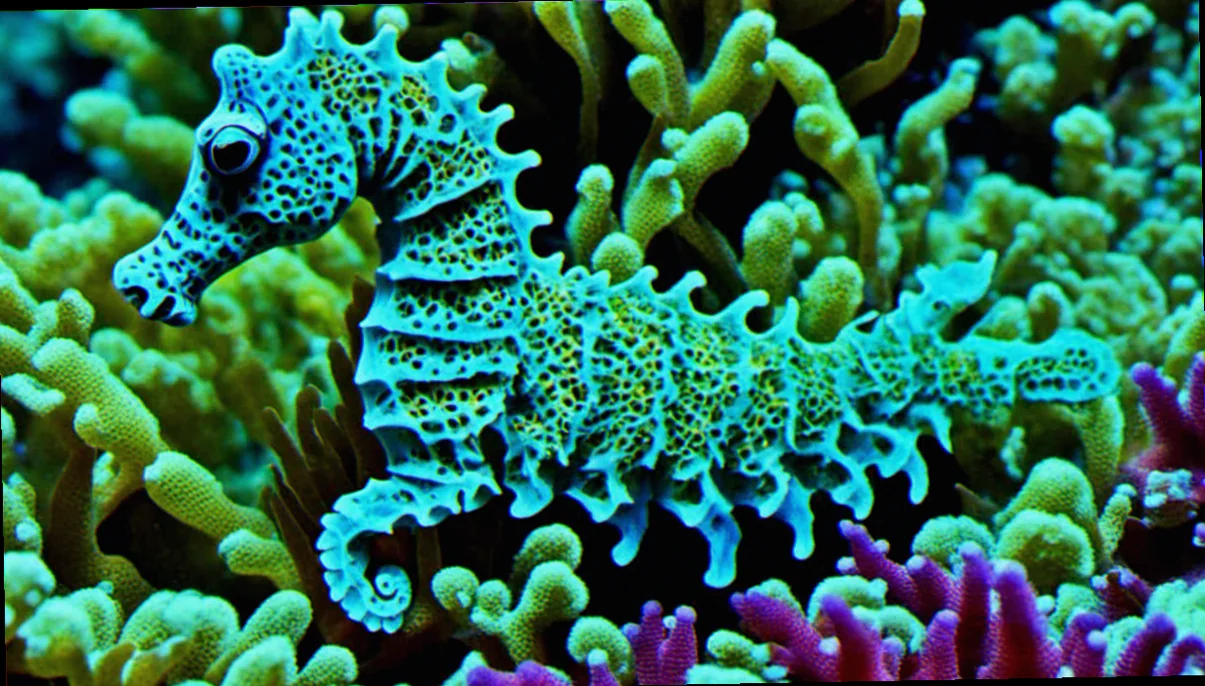
What is Camouflage of seahorses in WA waters?
The camouflage of seahorses in Western Australian waters refers to their sophisticated ability to alter their external appearance to match their environment. This is not merely a static coloration but an active process involving chromatophores, specialized pigment cells in their skin, which allow for rapid color changes. Furthermore, many seahorse species in WA can grow specialized skin filaments or tubercles that mimic the texture of the surrounding vegetation, such as seagrass blades or coral branches, further enhancing their concealment. This remarkable adaptation is crucial for their survival, enabling them to evade predators like larger fish and to lie in wait for small crustaceans, their primary food source.
Key Characteristics Overview
| Characteristic | Details |
|---|---|
| Size | Varies significantly by species, ranging from as small as 2.5 cm (1 inch) for pygmy seahorses to over 35 cm (14 inches) for larger species. WA waters host a variety of sizes. |
| Habitat Depth | Typically found in shallow to moderately deep waters, from the intertidal zone down to approximately 50 meters (165 feet), though some species may venture deeper. |
| Location | Abundant in coastal waters of Western Australia, including sheltered bays, estuaries, coral reefs, and seagrass meadows. |
| Diet | Carnivorous; they feed primarily on small crustaceans such as amphipods, copepods, and mysid shrimp, which they suck up through their snout. |
Behavior and Adaptations
- Survival mechanisms: Seahorses are masters of disguise, using their chromatophores to change color from pale yellows and greens to browns and reds to match their background. They can also adopt specific poses to mimic inanimate objects like seaweed or coral. The growth of dermal appendages further aids in this mimicry.
- Feeding behavior: They are ambush predators, remaining motionless and relying on their camouflage to approach unsuspecting prey. Once within range, they extend their snout rapidly, creating a vacuum to suck up their meal.
- Reproduction: Seahorses exhibit unique reproductive roles where the male carries the eggs in a specialized brood pouch on his abdomen until they hatch. Mating rituals can be elaborate and involve synchronized swimming and color changes.
- Movement: Their locomotion is primarily achieved by the rapid undulation of their dorsal fin, while their pectoral fins are used for steering. Their upright posture and slow, deliberate movements contribute to their ability to blend in.
- Communication: While not as prominent as in other marine life, some seahorse species may use subtle changes in color or body posture for communication during courtship or territorial disputes. Bioluminescence is not a common trait in seahorses for communication.
- Predators and defense: Their primary defense is their camouflage. However, they are preyed upon by larger fish, crabs, and birds. When threatened and unable to escape, they may inflate their bodies slightly to appear larger.
Common Misconceptions and Facts
Myth 1: Seahorses are aggressive hunters. Fact: Seahorses are passive ambush predators that rely on patience and camouflage rather than active pursuit.
Myth 2: All seahorses look alike. Fact: There are over 50 recognized species of seahorses worldwide, with significant variations in size, shape, and coloration, many of which are found in WA waters.
Myth 3: Seahorses can change color instantly like chameleons. Fact: While they can change color effectively, it's not instantaneous and can take minutes to hours to achieve the full desired effect depending on the stimulus and species.
Frequently Asked Questions (FAQ)
Can camouflage of seahorses in WA waters survive in shallow water?
Seahorses found in WA waters are generally adapted to specific salinity and temperature ranges found in their natural habitats, which often include shallow coastal areas like seagrass meadows and estuarine environments. While they can tolerate some fluctuations, rapid or extreme changes in water pressure, salinity, or temperature, which can occur with significant shifts between shallow and deeper waters or during extreme weather events, can be detrimental. Their physiology is finely tuned to their chosen depth and the associated environmental conditions. Therefore, sudden relocation to drastically different water depths without acclimatization can indeed be fatal.
How does camouflage of seahorses in WA waters find food in the deep ocean?
The premise of seahorses actively foraging in the "deep ocean" is generally inaccurate. Seahorse species found in WA waters primarily inhabit shallow to moderately deep coastal environments, including coral reefs, seagrass beds, and mangrove roots, typically not exceeding 50 meters. In these relatively shallow, visually complex environments, their camouflage is their primary hunting tool. They remain motionless, blending with their surroundings, and wait for small crustaceans to swim within range. Their excellent eyesight allows them to spot prey against detailed backgrounds, and their specialized snout acts like a pipette, rapidly sucking up unsuspecting organisms. They do not typically venture into the deep ocean where light is scarce and food sources differ significantly.
Is camouflage of seahorses in WA waters dangerous to humans?
Seahorses, including those with remarkable camouflage in WA waters, pose absolutely no danger to humans. They are not venomous, do not bite aggressively, and are generally timid creatures. Their primary defense mechanism is their ability to hide. Encounters with seahorses in their natural habitat are rare due to their excellent camouflage and their tendency to remain still. If you are lucky enough to spot one, the best approach is to observe from a respectful distance without disturbing them or their environment. They are fragile creatures and should be treated with care and admiration.