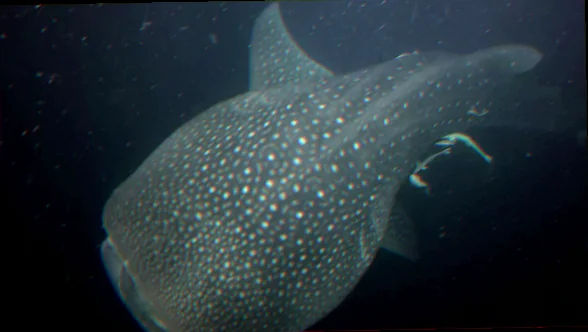
Basking whale sharks are the largest fish in the ocean, often mistaken for whales due to their immense size. They are gentle giants, filter-feeding on plankton and small organisms, posing no threat to humans. These fascinating creatures inhabit temperate and tropical waters worldwide, and understanding their biology is crucial for their conservation.
What is a Basking Whale Shark?
The basking whale shark (Cetorhinus maximus) is a cosmopolitan cartilaginous fish belonging to the family Cetorhinidae. Despite its name, it is a shark, not a whale, and represents the second-largest living fish species after the whale shark. Basking sharks are characterized by their enormous size, dark grey to bluish coloration, and a massive mouth capable of filtering vast quantities of water for food. They are ovoviviparous, meaning eggs develop and hatch within the mother's body, and pups are born live.
Key Characteristics Overview
| Characteristic | Details |
|---|---|
| Size | Typically 6-8 meters (20-26 feet) long, but can reach up to 12 meters (39 feet) or more. Maximum recorded weight exceeds 21.5 tonnes. |
| Habitat Depth | 0-600 meters (0-1968 feet), though commonly found between 50-150 meters (164-492 feet). |
| Location | Temperate and tropical oceans worldwide. Common areas include the coasts of Europe, North and South America, South Africa, Australia, and Japan. Seasonal migrations are observed. |
| Diet | Primarily zooplankton, including copepods, krill, and larval fish. They are ram-feeding filter feeders. |
Behavior and Adaptations
- Survival mechanisms: Basking sharks possess a cartilaginous skeleton, reducing weight and increasing flexibility. Their dark coloration provides camouflage in the open ocean. They also exhibit a slow metabolic rate, conserving energy in nutrient-poor environments.
- Feeding behavior: Basking sharks are ram-feeding filter feeders, meaning they swim forward with their enormous mouths open, passively filtering plankton from the water. They utilize gill rakers - comb-like structures in their gills - to strain out the plankton. They can process over 2,000 tons of water per hour.
- Reproduction: Basking sharks have a slow reproductive rate. They are ovoviviparous, with gestation periods estimated to be over a year, potentially up to three years. Litters are small, typically containing only one to six pups.
- Movement: They are relatively slow swimmers, typically cruising at around 5 km/h (3 mph). They exhibit both horizontal and vertical migrations, likely related to plankton blooms and breeding. They often breach, leaping out of the water, though the reason for this behavior is not fully understood.
- Communication: Communication is poorly understood. They likely rely on chemical cues and potentially low-frequency sounds for communication, but research is ongoing. Bioluminescence has not been observed in this species.
- Predators and defense: Adult basking sharks have few natural predators due to their size. Historically, they were hunted for their liver oil, fins, and meat. Potential predators for young basking sharks include larger sharks and marine mammals. Their primary defense is their immense size and relatively docile nature.
Common Misconceptions and Facts
Myth 1: They are dangerous to humans. Fact: Basking sharks are incredibly gentle and pose no threat to humans. They are filter feeders and have no interest in consuming larger prey. Encounters are generally peaceful.
Myth 2: They are all giant monsters. Fact: While they are large, basking sharks exhibit significant size variation. Younger individuals are considerably smaller and more vulnerable. Their size is dependent on age, food availability, and overall health.
Myth 3: They can survive in shallow water indefinitely. Fact: While they can venture into shallower waters, prolonged exposure to shallow depths can be detrimental. The pressure changes can affect their physiology, and they are more susceptible to boat strikes and entanglement in fishing gear.
Myth 4: They are closely related to whale sharks. Fact: While both are large filter-feeding sharks, they belong to different families. Basking sharks (Cetorhinidae) are more closely related to carpet sharks, while whale sharks (Rhincodontidae) are in their own unique family.
Myth 5: They are rare and seldom seen. Fact: While their populations have declined, basking sharks are still found in many parts of the world. Seasonal aggregations occur in areas with high plankton concentrations, making sightings more common during these periods.
Frequently Asked Questions (FAQ)
Can Basking whale shark survive in shallow water?
Basking sharks can tolerate shallow water for short periods, often seen near the surface to maximize plankton intake. However, they are adapted to deeper ocean environments and prolonged exposure to shallow depths can cause physiological stress. The pressure difference can affect their gas exchange and buoyancy, potentially leading to discomfort or even injury. Furthermore, shallow waters increase their risk of collisions with boats and entanglement in fishing gear, making it a less than ideal habitat for extended periods.
How does Basking whale shark find food in the deep ocean?
Basking sharks don't actively 'find' food in the traditional sense. They rely on locating areas with high concentrations of plankton, often following ocean currents and upwelling zones where nutrient-rich water rises to the surface. They use a combination of sensory cues, including detecting changes in water temperature and salinity, to identify these productive areas. Once in a plankton-rich zone, they swim with their mouths open, ram-feeding and filtering vast quantities of water to extract their food.
Is Basking whale shark dangerous to humans?
No, basking sharks are not dangerous to humans. They are gentle giants and pose virtually no threat. Their diet consists entirely of plankton, and they lack the predatory instincts or physical capabilities to harm a human. Encounters with basking sharks are typically peaceful, and they often appear unconcerned by the presence of divers or boats. However, it's always important to maintain a respectful distance and avoid disturbing their natural behavior.
What is the conservation status of the Basking Whale Shark?
The Basking Whale Shark is currently listed as ‘Endangered' by the International Union for Conservation of Nature (IUCN). Their populations have declined significantly due to historical overfishing, accidental entanglement in fishing gear, and habitat degradation. Ongoing conservation efforts include implementing fishing regulations, establishing marine protected areas, and raising awareness about the importance of protecting these magnificent creatures.
How can I help protect Basking Whale Sharks?
You can support basking shark conservation by reducing your plastic consumption, supporting sustainable seafood choices, and advocating for stronger marine protection policies. Reporting sightings to local marine research organizations can also contribute valuable data for conservation efforts. Educating others about these gentle giants and the threats they face is crucial for ensuring their survival.