What is Pilot Whale Social Structure?
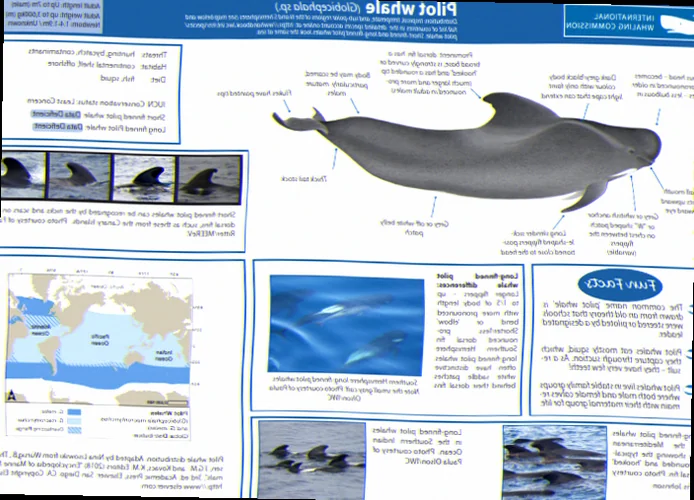
Pilot whales (Globicephala spp.) are highly social marine mammals belonging to the oceanic dolphin family. Unlike many other dolphin species, pilot whales exhibit a remarkably stable and enduring social structure, most notably the formation of matrilineal pods - groups centered around a single, dominant female. These pods, often consisting of related females and their offspring, can persist for decades, with individuals remaining within the same group throughout their lives. Research suggests that these pods are not simply family units; they function as cohesive social units with established hierarchies and cooperative behaviors. Different species of pilot whales, such as the Long-finned Pilot Whale (Globicephala melas) and the Short-finned Pilot Whale (Globicephala macrorhynchus), display slightly varying pod sizes and social dynamics, but the core principle of matrilineal organization remains consistent. Genetic studies have confirmed the strong relatedness within these pods, demonstrating that individuals share a significant proportion of their genes, reinforcing the familial bonds.Key Characteristics Overview
| Characteristic | Details |
|---|---|
| Size | Long-finned Pilot Whale: 6-8 meters (20-26 feet); Short-finned Pilot Whale: 5-7 meters (16-23 feet) |
| Habitat Depth | Typically 200-600 meters (650-2000 feet), though they have been observed at depths exceeding 1000 meters (3300 feet) and can surface at the surface. |
| Location | Found in all major oceans, including the Atlantic, Pacific, and Indian Oceans, with higher concentrations in colder, offshore waters. |
| Diet | Primarily fish and squid, with a preference for deep-water species. They employ cooperative hunting techniques to corral schools of prey. |
Behavior and Adaptations
- Survival Mechanisms: Pilot whales possess exceptional echolocation abilities, crucial for navigating and hunting in the dark depths of the ocean. Their robust bodies and thick blubber layers provide insulation against cold water temperatures. They also exhibit strong swimming skills and endurance, allowing them to travel long distances in search of food.
- Feeding Behavior: Pilot whales are renowned for their sophisticated cooperative hunting strategies. They often work together to herd schools of fish or squid, driving them towards the shore where they can be more easily captured. This 'mud ring' technique, where they encircle prey and create a swirling current, is particularly common.
- Reproduction: Breeding occurs annually, typically in the winter months. Females give birth to a single calf after a gestation period of approximately 14-16 months. Calves remain with their mothers for several years, learning essential survival skills.
- Movement: Pilot whales are powerful swimmers, capable of reaching speeds of up to 50 kilometers per hour (31 mph). They frequently travel in lines, utilizing hydrodynamic advantages to reduce drag and conserve energy.
- Communication: Pilot whales communicate through a variety of vocalizations, including whistles, clicks, and pulsed calls. These sounds are used for maintaining contact within the pod, coordinating hunting efforts, and conveying information about potential threats. Recent research suggests they may also utilize subtle body language and tactile communication.
- Predators and Defense: Pilot whales face threats from sharks, orcas (killer whales), and occasionally, humans. They defend themselves through coordinated attacks, using their beaks and bodies to ram and injure potential predators. Their strong social bonds also provide a significant advantage in defense.
Common Misconceptions and Facts
Myth 1: They are dangerous to humans. Fact: While pilot whales *can* be aggressive if provoked or distressed, they rarely pose a threat to humans in their natural environment. Most deep-sea creatures, including pilot whales, avoid contact with humans. Attacks are typically the result of confusion or fear, not intentional aggression.
Myth 2: They are all giant monsters. Fact: While some pilot whale species can reach considerable sizes, many are relatively small, averaging around 5-7 meters in length. They are graceful and agile animals, not the imposing behemoths often depicted in popular culture.
Myth 3: They can survive in shallow water. Fact: Pilot whales are adapted to the immense pressure of the deep ocean. Rapid changes in water depth can cause significant barotrauma, leading to lung collapse and potentially fatal injuries. They generally avoid shallow coastal waters.
Frequently Asked Questions (FAQ)
Can Pilot whale social structure survive in shallow water?
Pilot whale social structures are fundamentally adapted to the high-pressure environment of the deep ocean. The rapid pressure changes encountered in shallow water pose a significant threat. As water depth increases, the pressure increases proportionally. When a pilot whale ascends rapidly, the air in its lungs expands, potentially rupturing lung tissue - a condition known as barotrauma. While they may occasionally venture into shallower waters, particularly during migration or foraging, prolonged exposure is detrimental, and they typically avoid areas with significant depth variations. Their physiological adaptations, including specialized lung tissue and blood vessel structure, are not suited for the fluctuating pressures of shallow environments.
How does Pilot whale social structure find food in the deep ocean?
Pilot whales utilize a combination of sophisticated echolocation and cooperative hunting techniques to locate and capture prey in the deep ocean. Their echolocation abilities are exceptionally refined, allowing them to detect the subtle sounds produced by fish and squid even in the darkness. Once a potential food source is identified, the pod will coordinate their movements to herd the prey into a concentrated area. The 'mud ring' technique, as mentioned previously, is a prime example of this cooperative behavior, creating a swirling current that traps the prey. They also employ 'bubble-net feeding,' where they swim in a circle, blowing bubbles to concentrate the prey before lunging upwards to capture them.
Is Pilot whale social structure dangerous to humans?
Pilot whales are generally not considered dangerous to humans. While they possess powerful beaks and can be aggressive if provoked or distressed, attacks are rare and typically occur when the whales are confused or threatened. Most encounters with pilot whales in the wild are peaceful. However, it's crucial to maintain a respectful distance and avoid approaching or harassing them. In certain situations, particularly during strandings, pilot whales may exhibit unusual behavior, and it's essential to follow the guidance of trained marine mammal experts. Never attempt to interact with or feed pilot whales, as this can disrupt their natural behavior and potentially lead to harm.