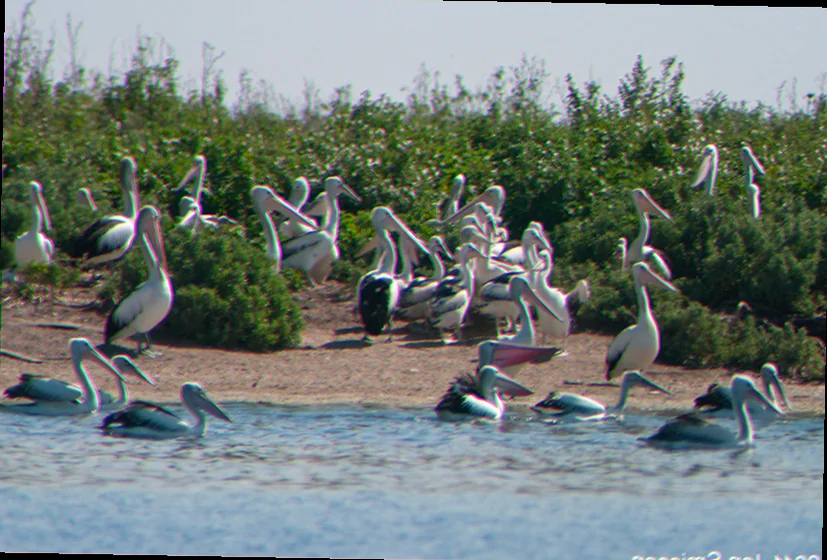
What is Mud islands migratory bird habitats?
Mud islands, in the context of migratory bird habitats, refer to temporary or semi-permanent land formations composed primarily of mud, silt, and organic detritus. These features are typically found in intertidal zones, estuaries, and coastal wetlands. They are characterized by their fluctuating physical presence, often appearing and disappearing with tidal cycles, seasonal sediment buildup, and erosion. For migratory birds, these mud islands represent critical stopover sites, offering concentrated sources of food and safe roosting areas during their long-distance migrations.
Key Characteristics Overview
| Characteristic | Details |
|---|---|
| Size | Highly variable, ranging from a few square meters to several hectares. Size fluctuates with tidal levels, erosion, and sediment deposition. |
| Habitat Depth | Not applicable in terms of water depth, as these are terrestrial/intertidal formations. The surrounding water depth is typically shallow to moderate, allowing for foraging. |
| Location | Coastal regions, estuaries, tidal flats, deltas, and sheltered bays worldwide. Common in areas with significant riverine input of sediment. |
| Diet | Primarily invertebrates (worms, mollusks, crustaceans), small fish, and seeds found within the mud and surrounding shallow waters. |
Behavior and Adaptations
- Survival mechanisms: Birds exhibit remarkable endurance and navigation skills to reach these habitats. Many species have specialized bill shapes and lengths for probing mud efficiently. Their plumage often provides camouflage against the muddy substrate.
- Feeding behavior: Migratory birds are opportunistic feeders on mud islands. They employ various techniques, including probing the mud with their beaks to extract buried invertebrates, sifting through surface sediment, and snatching small fish or crustaceans from shallow pools or receding tides. The abundance of food is crucial for replenishing energy reserves depleted during flight.
- Reproduction: While mud islands are primarily stopover sites, some species may nest on more stable, larger mudflats or adjacent vegetated areas if conditions are favorable and predators are scarce. However, nesting is less common on ephemeral mud islands due to their instability.
- Movement: Birds are highly mobile, undertaking long-distance flights between breeding and wintering grounds. On mud islands, their movement is dictated by tidal cycles and foraging needs, often moving to higher ground during high tide and spreading out to forage as the tide recedes.
- Communication: Communication among migratory birds on mud islands involves a range of vocalizations, alarm calls, and visual displays. These are crucial for maintaining flock cohesion, signaling danger, and coordinating feeding activities.
- Predators and defense: Common predators include raptors, foxes, and gulls. Birds defend themselves through vigilance, rapid flight, camouflage, and mobbing behavior to deter attackers. The open nature of many mudflat habitats can make them vulnerable, emphasizing the need for safe roosting areas.
Common Misconceptions and Facts
Myth 1: Mud islands are permanent landforms. Fact: Many mud islands are ephemeral, their existence dependent on tides, currents, and sediment supply, making them dynamic and transient habitats.
Myth 2: All birds that visit mud islands are seabirds. Fact: A vast array of migratory birds, including shorebirds, waterfowl, and even some passerines, utilize mud islands for foraging and resting.
Myth 3: Mud islands offer limited nutritional value. Fact: The nutrient-rich sediments of mud islands teem with invertebrates and small organisms, providing a concentrated and vital food source for migrating birds.
Frequently Asked Questions (FAQ)
Can Mud islands migratory bird habitats survive in shallow water?
Mud islands are not submerged in shallow water in the same way as coral reefs or submerged seagrass beds. Instead, they are intertidal or supratidal formations that are exposed at low tide and may be inundated by high tide. Their survival as habitats is directly linked to the balance of sediment deposition and erosion, influenced by currents, wave action, and sea-level changes. While the surrounding water is typically shallow, allowing birds to forage, the mud island itself needs to remain at an elevation that provides dry roosting and resting space for significant periods, particularly during high tides.
How does Mud islands migratory bird habitats find food in the deep ocean?
Mud islands are not found in the deep ocean. They are coastal phenomena, typically located in estuaries, tidal flats, and sheltered bays. The food sources found on and around mud islands are in relatively shallow, nutrient-rich waters and on the mudflats themselves. Migratory birds find food here by using specialized foraging techniques. Shorebirds, for example, use their long, sensitive bills to probe the mud for buried invertebrates like worms and bivalves. Others may sift through surface sediments for smaller prey or feed on crustaceans and small fish exposed by receding tides or present in shallow pools. The high productivity of these environments, often fueled by nutrients from rivers, makes them excellent feeding grounds.
Is Mud islands migratory bird habitats dangerous to humans?
Mud islands are generally not dangerous to humans. They are natural coastal features. The primary risks associated with visiting mud islands or their surrounding areas are related to the environment itself. These include the potential for getting stuck in soft mud (quicksand-like conditions), encountering strong tidal currents, or experiencing sudden changes in weather. For migratory birds, the main dangers are habitat degradation or loss due to human activities such as coastal development, pollution, and altered sediment flows, which can reduce the availability of food and safe resting sites. Encounters with humans are typically minimal for the birds, and vice-versa, unless humans are actively disturbing the habitats.