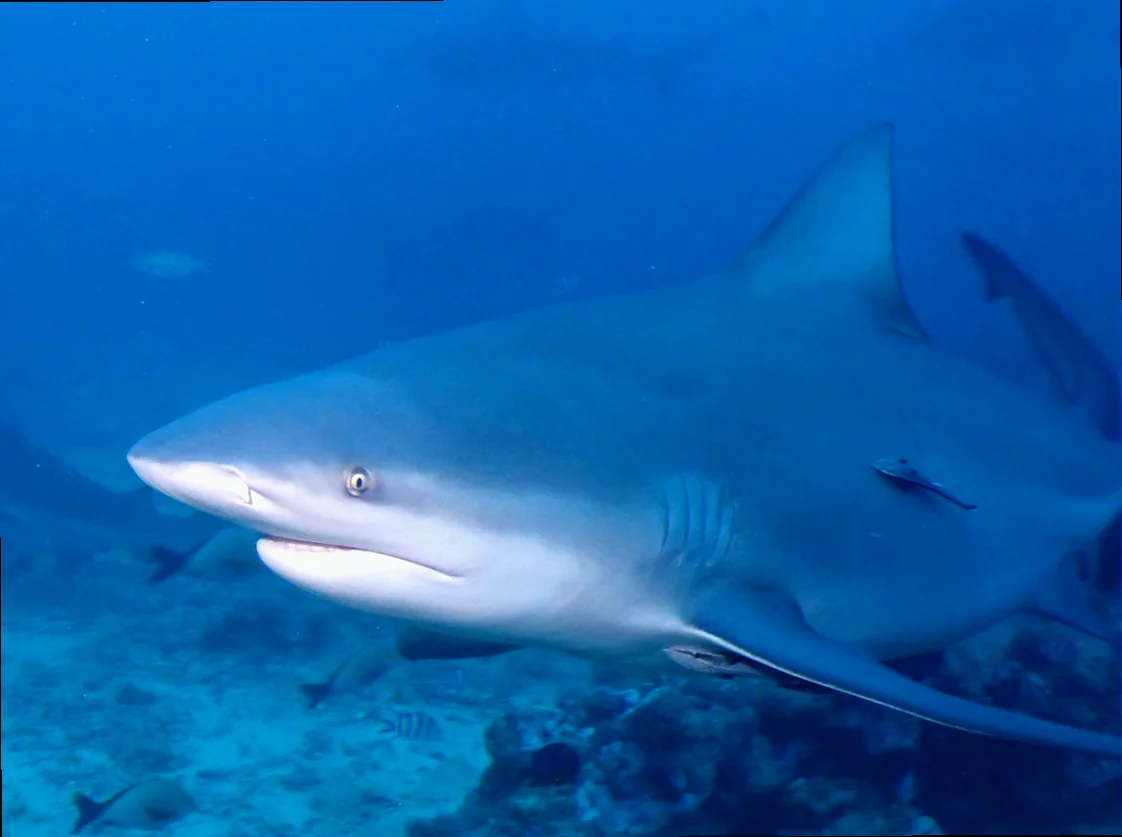
Bull sharks (Carcharhinus leucas) are frequently found in estuarine habitats along the Australian coastline, including rivers, estuaries, and even brackish water systems. Their ability to tolerate a wide range of salinities makes them uniquely suited to these environments, often venturing far inland. This adaptability, combined with their aggressive nature, makes understanding their presence in these areas crucial for both conservation and public safety.
What is Bull shark estuarine habitats australia?
Bull shark estuarine habitats in Australia refer to the areas where bull sharks actively reside, breed, and feed within brackish water environments like estuaries, river mouths, and lower sections of coastal rivers. These habitats are characterized by a mix of saltwater and freshwater, creating a unique ecological niche that bull sharks are exceptionally well-adapted to exploit. Unlike most sharks which are strictly marine, bull sharks possess physiological mechanisms allowing them to osmoregulate - maintain a stable internal salt balance - in varying salinity levels. This allows them to venture far upstream, sometimes hundreds of kilometers from the ocean, making them a significant presence in Australian waterways.
Key Characteristics Overview
| Characteristic | Details |
|---|---|
| Size | Adults typically reach 2.1-3.5 meters (7-11.5 feet) in length and weigh 136-232 kg (300-511 lbs). Females are generally larger than males. |
| Habitat Depth | 0-30 meters (0-98 feet) is common in estuarine environments, but they can tolerate deeper marine waters. |
| Location | Found in tropical and subtropical waters globally, with a significant presence along the Australian coastline, particularly in Queensland, New South Wales, and Western Australia. Common estuaries include the Brisbane River, Hawkesbury River, and Swan River. |
| Diet | Opportunistic feeders; diet includes bony fish, sharks, rays, turtles, birds, and crustaceans. They are known to scavenge and will consume almost anything. |
Behavior and Adaptations
- Survival mechanisms: Bull sharks possess highly efficient kidneys and rectal glands that help regulate salt balance in varying salinities. Their ability to switch between aerobic and anaerobic metabolism allows them to thrive in oxygen-poor estuarine waters.
- Feeding behavior: They are apex predators and employ an ambush hunting strategy, utilizing murky estuarine waters to their advantage. They are opportunistic feeders, consuming a wide variety of prey.
- Reproduction: Bull sharks are viviparous, meaning they give birth to live young. Breeding typically occurs in estuarine environments during warmer months (late spring/summer), providing pups with a relatively safe nursery ground. Litter sizes range from 1-13 pups.
- Movement: They are strong swimmers capable of bursts of speed. They exhibit both horizontal and vertical movement patterns, often following prey or seeking optimal salinity levels. Tagging studies reveal seasonal migrations between marine and estuarine habitats.
- Communication: Primarily rely on hydrodynamic cues and electrical reception to detect prey and navigate. Limited evidence suggests they may use body language for intraspecies communication.
- Predators and defense: Adult bull sharks have few natural predators, though larger sharks (like tiger sharks) may occasionally prey on them. Pups are vulnerable to larger fish and sharks. Their aggressive nature and powerful build serve as a primary defense mechanism.
Common Misconceptions and Facts
Myth 1: Bull sharks are the most dangerous shark species. Fact: While responsible for a number of attacks, they are not statistically the most dangerous. Great white sharks are involved in more fatal attacks globally, but bull sharks' proximity to human populations in estuaries increases encounter rates.
Myth 2: Bull sharks only inhabit saltwater. Fact: Their unique osmoregulatory abilities allow them to thrive in freshwater for extended periods, even entering rivers hundreds of kilometers inland.
Myth 3: All bull shark attacks are unprovoked. Fact: Many attacks are believed to be cases of mistaken identity, where the shark investigates a human believing it to be prey, or are provoked by human activity like spearfishing.
Myth 4: Bull sharks are rare in Australian estuaries. Fact: They are relatively common in many Australian estuaries, particularly along the eastern and northern coasts, and are a natural part of the ecosystem.
Frequently Asked Questions (FAQ)
Can Bull shark estuarine habitats australia survive in shallow water?
Yes, bull sharks can survive in very shallow water, even as little as one meter deep. This is due to their ability to tolerate low oxygen levels and their efficient osmoregulation. Unlike many other shark species, they don't rely heavily on deep-water pressure for physiological function. However, prolonged exposure to extremely low salinity or rapidly changing conditions can still be stressful. Their tolerance doesn't mean they *prefer* shallow water; they utilize it for hunting and accessing prey in estuarine environments.
How does Bull shark estuarine habitats australia find food in the deep ocean?
While bull sharks are well-known for their estuarine presence, they also frequent marine environments. In the ocean, they utilize a combination of senses to locate food. They have ampullae of Lorenzini, electroreceptors that detect the electrical fields produced by other animals, even those buried in the sand. They also possess a keen sense of smell, capable of detecting minute traces of blood or other attractants in the water. Their lateral line system detects vibrations, helping them pinpoint prey movement. They are opportunistic feeders, so they'll actively hunt, scavenge, and ambush prey depending on availability.
Is Bull shark estuarine habitats australia dangerous to humans?
Bull sharks are considered potentially dangerous to humans, but attacks are relatively rare. Their aggressive nature, combined with their size and proximity to populated areas (especially in estuaries and rivers), increases the risk of encounters. Most attacks are not fatal, often resulting in bites to the limbs. To minimize risk, avoid swimming in murky waters, especially at dawn or dusk. Do not swim near river mouths after heavy rainfall, as this can attract sharks. Avoid wearing shiny jewelry, which can resemble fish scales. If you encounter a bull shark, remain calm and slowly back away, maintaining eye contact.
It's important to remember that bull sharks play a vital role in maintaining the health of estuarine ecosystems. Understanding their behavior and respecting their habitat is crucial for both human safety and conservation efforts.