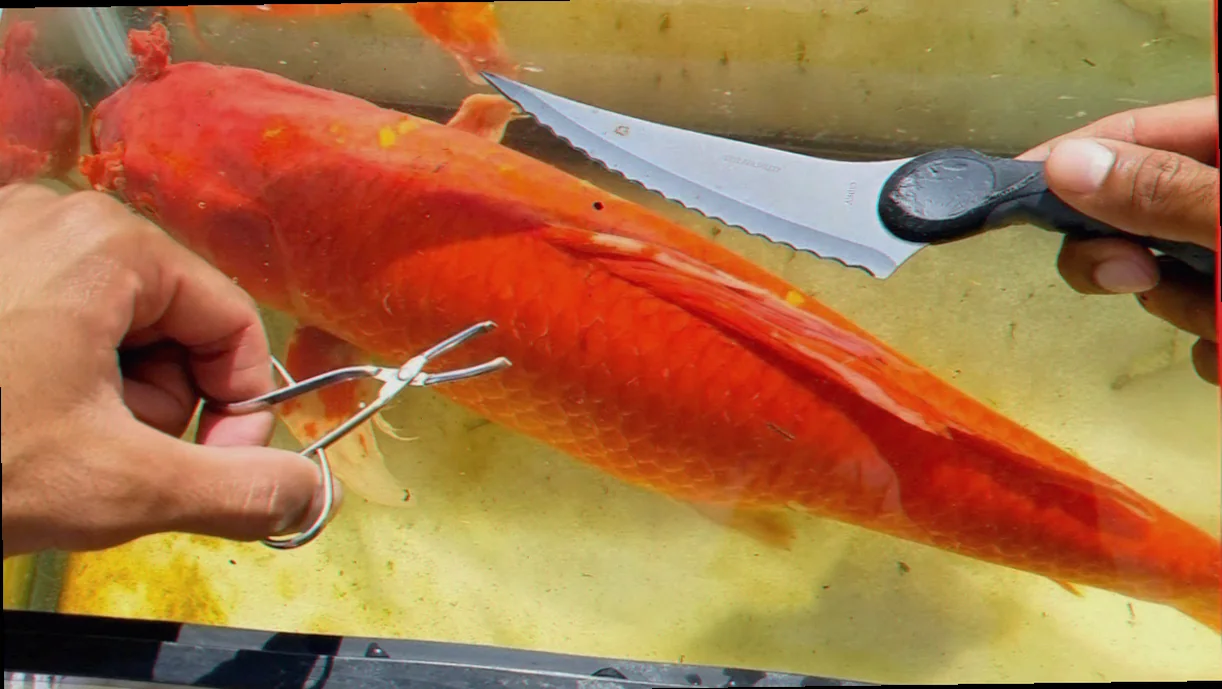
Fish parasite removal is the process of eliminating external and internal parasites from fish, crucial for their health and survival. This can be achieved through natural behaviors like rubbing against objects, or with the assistance of cleaner fish and invertebrates. Aquarium hobbyists and fish farmers often manually remove parasites or utilize medicated treatments to maintain healthy stock.
What is Fish parasite removal?
Fish parasite removal encompasses a range of strategies employed by fish to rid themselves of parasitic organisms that attach to or invade their bodies. These parasites can range from visible external organisms like copepods and flukes to internal worms and protozoans. The removal process can be behavioral, involving the fish actively seeking ways to dislodge parasites, or biological, relying on symbiotic relationships with ‘cleaner' organisms. Effective parasite removal is vital for maintaining fish health, preventing disease outbreaks, and ensuring optimal growth and reproduction.
Key Characteristics Overview
| Characteristic | Details |
|---|---|
| Size | Varies greatly depending on the parasite; copepods can be 0.2-2mm, flukes 1-10mm, worms can reach several centimeters. |
| Habitat Depth | Found in all aquatic habitats, from freshwater streams to the deepest ocean trenches. Parasite prevalence often increases with host density. |
| Location | Worldwide distribution, with species-specific variations based on host range and environmental conditions. |
| Diet | Parasites obtain nutrients from their fish host, consuming blood, tissue, scales, or digested food. Some have complex life cycles involving multiple hosts. |
Behavior and Adaptations
- Survival mechanisms: Parasites exhibit remarkable adaptations for survival, including adhesive structures for attachment (hooks, suckers), protective outer layers (cuticles), and the ability to alter host behavior to increase transmission. Many have complex life cycles involving intermediate hosts.
- Feeding behavior: Parasites feed in diverse ways. Ectoparasites like copepods scrape skin and scales for tissue fluids, while endoparasites like tapeworms absorb nutrients directly from the fish's gut. Some parasites inject enzymes to break down host tissues.
- Reproduction: Reproduction strategies vary widely. Some parasites reproduce asexually within a single host, while others require multiple hosts to complete their life cycle. Many release large numbers of eggs or larvae into the water.
- Movement: Parasite movement depends on their life stage and type. Free-swimming larvae use cilia or flagella for locomotion, while adult parasites are often sessile or move slowly using specialized appendages.
- Communication: While not ‘communication' in the traditional sense, some parasites release chemical signals to attract hosts or manipulate their behavior.
- Predators and defense: Parasites face predation from other invertebrates and fish. They defend themselves through camouflage, protective coverings, and rapid reproduction. Host immune responses also pose a significant threat.
Common Misconceptions and Facts
Myth 1: Fish parasites are always a sign of poor water quality. Fact: While poor water quality can *stress* fish and make them more susceptible to parasites, parasites can infect even healthy fish in pristine environments.
Myth 2: All fish parasites are visible to the naked eye. Fact: Many internal parasites, like protozoans and some worms, are microscopic and require examination under a microscope for diagnosis.
Myth 3: Once a fish has parasites, it's doomed. Fact: With prompt and appropriate treatment, most fish can recover from parasitic infections. Early detection is key.
Myth 4: Saltwater fish are less prone to parasites than freshwater fish. Fact: Both saltwater and freshwater fish are susceptible to a wide range of parasites, though the specific types differ.
Frequently Asked Questions (FAQ)
Can Fish parasite removal survive in shallow water?
Generally, no. Most parasites adapted to deep-sea environments cannot survive in shallow water due to significant changes in pressure, temperature, and salinity. Deep-sea parasites often lack the physiological mechanisms to cope with these conditions. The sudden decrease in pressure can cause cellular damage and disrupt their biological processes. Furthermore, the different chemical composition of shallow water can be toxic to them. While some parasite larvae might briefly survive, they typically cannot complete their life cycle in a drastically different environment.
How does Fish parasite removal find food in the deep ocean?
Parasites in the deep ocean employ several strategies to locate and feed on hosts. Many have evolved highly sensitive chemoreceptors to detect chemical cues released by potential hosts, even over long distances. Others rely on random encounters, increasing their chances of finding a host in the relatively sparse deep-sea environment. Some parasites have complex life cycles involving intermediate hosts, which facilitate transmission to the final fish host. Adaptations like bioluminescence in intermediate hosts can also attract fish, increasing the likelihood of parasite transmission. The sheer abundance of fish in certain areas, even in the deep sea, also increases the probability of successful parasite feeding.
Is Fish parasite removal dangerous to humans?
The vast majority of fish parasites are not dangerous to humans. Most are highly host-specific, meaning they can only survive and reproduce within their intended fish host. However, some parasites can cause temporary skin irritation if they come into contact with human skin, but they cannot penetrate and establish an infection. Consuming raw or undercooked fish can pose a risk of contracting certain parasites, such as nematodes (roundworms) or tapeworms. Thoroughly cooking fish to an internal temperature of 145°F (63°C) effectively kills these parasites. Proper hygiene practices, such as washing hands after handling fish, also minimize the risk of accidental exposure. It's important to note that the risk of contracting fish parasites from properly prepared seafood is relatively low.
What are some common methods for removing parasites from aquarium fish?
Several methods are used to remove parasites from aquarium fish. Manual removal with tweezers can be effective for larger, visible parasites like anchor worms. Salt baths (using non-iodized salt) can help kill parasites and reduce inflammation. Medicated treatments containing ingredients like praziquantel, formalin, or malachite green are commonly used, but should be used cautiously and according to instructions. Raising the water temperature slightly can accelerate parasite life cycles and make them more vulnerable to treatment. Cleaner fish, like neon tetras or corydoras catfish, can help control parasite populations in larger tanks. Maintaining good water quality and a healthy fish immune system are also crucial preventative measures.
How can I prevent parasite outbreaks in my fish tank?
Preventing parasite outbreaks involves several key strategies. Quarantine new fish for at least 2-4 weeks before introducing them to the main tank to observe for any signs of illness. Maintain excellent water quality through regular water changes and filtration. Avoid overcrowding, as stressed fish are more susceptible to parasites. Provide a balanced diet to support a strong immune system. Disinfect equipment (nets, siphons) between tanks to prevent cross-contamination. Regularly observe your fish for any unusual behavior or physical signs of parasites.