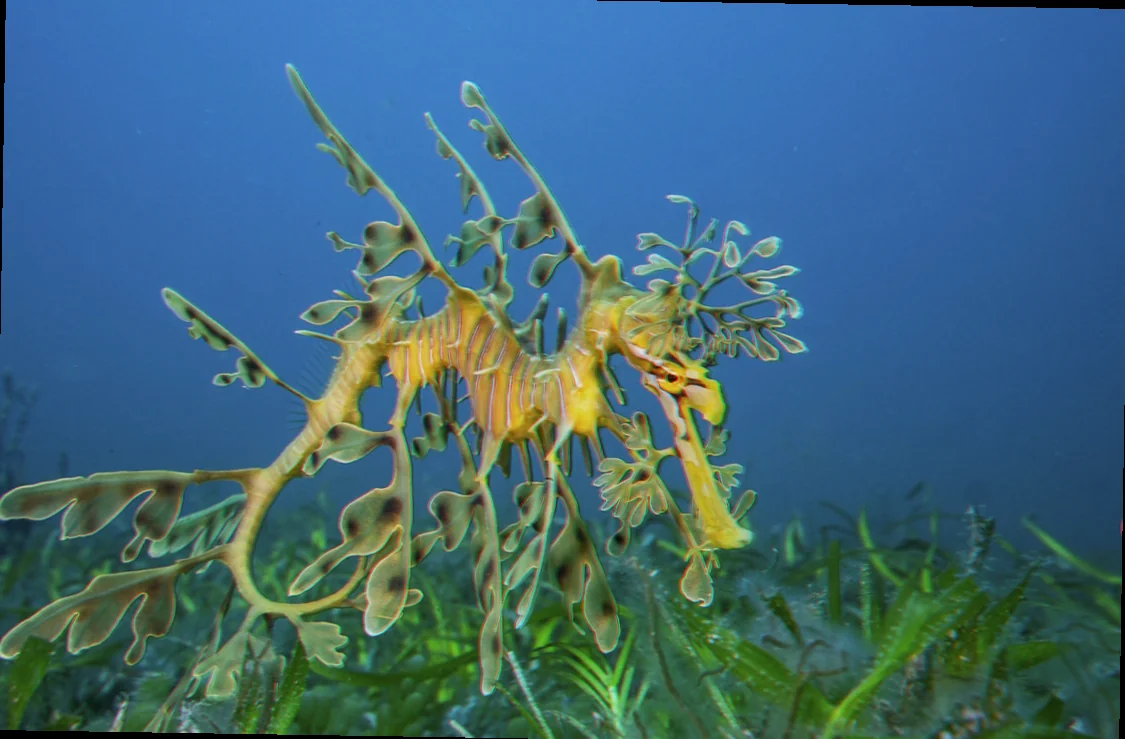
What is Seadragon camouflage techniques south australia?
Seadragon camouflage techniques in South Australia refer to the extraordinary biological adaptations that allow these marine fish to effectively conceal themselves within their natural environment. This includes the development of leaf-like or weed-like appendages that mimic seaweed, providing exceptional visual disguise. Furthermore, their skin contains chromatophores, specialized pigment cells that enable them to alter their coloration to match the surrounding flora, a dynamic process vital for both predator avoidance and successful hunting.
Key Characteristics Overview
| Characteristic | Details |
|---|---|
| Size | Leafy Seadragons typically reach up to 35 cm (14 inches), while Weedy Seadragons are slightly smaller, around 20-30 cm (8-12 inches). |
| Habitat Depth | Generally found in depths ranging from 5 to 50 meters (16 to 164 feet). |
| Location | Primarily inhabit the temperate coastal waters of southern Australia, with specific concentrations in South Australia, Victoria, and Western Australia. |
| Diet | Carnivorous, feeding on small crustaceans such as mysid shrimp, amphipods, and plankton, which they suck into their snout using a small mouth. |
Behavior and Adaptations
- Survival mechanisms: The most prominent survival mechanism is their elaborate camouflage. Leafy Seadragons possess ornate, flattened appendages that resemble drifting seaweed, making them virtually indistinguishable from their surroundings. Weedy Seadragons have more frond-like appendages. Their slow, graceful movement further aids their disguise, mimicking the sway of seaweed in the current.
- Feeding behavior: Seadragons are ambush predators. They patiently wait for small crustaceans to swim within range, then rapidly suck them into their elongated snout. Their camouflage is essential for getting close enough to their unsuspecting prey without being detected.
- Reproduction: The male seadragon is responsible for carrying the eggs. The female deposits her eggs onto a spongy patch on the underside of the male's tail, where they are fertilized and remain attached until they hatch. This unique reproductive strategy is shared with seahorses.
- Movement: Seadragons are not strong swimmers. They possess tiny, almost invisible pectoral fins on either side of their head for steering and a small dorsal fin on their tail for propulsion. They often drift with the currents, relying on their camouflage to remain hidden while conserving energy.
- Communication: Seadragons are largely solitary and do not exhibit complex communication methods. Their primary form of interaction is through visual cues during courtship.
- Predators and defense: Their primary defense is their exceptional camouflage, which makes them difficult for predators like larger fish and seals to spot. When detected, their only recourse is to drift away or hope their disguise remains effective. They lack spines or venom, making them vulnerable if discovered.
Common Misconceptions and Facts
Myth 1: Seadragons are aggressive and dangerous. Fact: Seadragons are incredibly docile and pose no threat to humans. Their primary defense is to hide; they will flee or remain still if approached.
Myth 2: Seadragons are a type of seahorse. Fact: While closely related to seahorses and sharing some characteristics (like male parental care), seadragons are distinct species with their own unique morphology and ecological roles.
Myth 3: Seadragons can change their camouflage instantly. Fact: While they can adjust their coloration, the process is not instantaneous. It takes time for their chromatophores to respond to environmental cues, and their physical appendages, while resembling seaweed, are permanent structures.
Frequently Asked Questions (FAQ)
Can Seadragon camouflage techniques south australia survive in shallow water?
The ability of seadragons to survive in shallow water is limited. While they are found in coastal areas, they generally prefer depths of at least 5 meters (16 feet) where the water is cooler and more stable. Extremely shallow water can expose them to greater temperature fluctuations, increased wave action, and potentially higher predation risk. Furthermore, significant changes in water pressure can be detrimental to their delicate physiology, making prolonged exposure to very shallow, exposed areas less survivable than their preferred temperate reef environments.
How does Seadragon camouflage techniques south australia find food in the deep ocean?
Seadragons, including those in South Australia, do not inhabit the deep ocean. Their preferred habitat is temperate coastal waters, typically found in seagrass meadows and around rocky reefs at depths between 5 and 50 meters (16 to 164 feet). In these environments, they find food by relying heavily on their camouflage. They remain motionless, blending in with seaweed and kelp, and wait for small crustaceans like mysid shrimp and plankton to swim within range of their elongated snout. They then use a rapid suction feeding mechanism to capture their prey.
Is Seadragon camouflage techniques south australia dangerous to humans?
Seadragons found in South Australia are not dangerous to humans in any way. They are gentle, slow-moving creatures with no defensive capabilities such as venom or sharp spines. Their primary defense mechanism is their extraordinary camouflage, which makes them very difficult to spot. If encountered by a diver or snorkeler, they will typically remain still or slowly drift away. There is no risk of them biting or attacking humans; their small mouths are designed for consuming tiny invertebrates, not for any form of aggression towards larger animals.