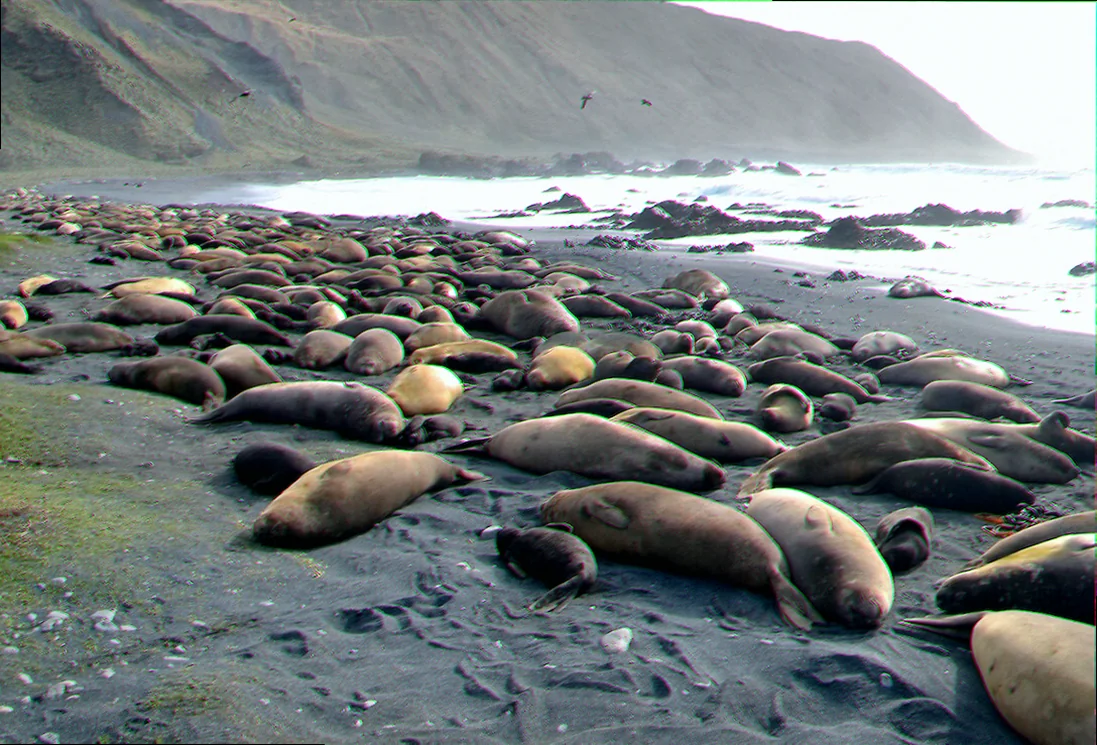
What is Macquarie island elephant seal colonies?
Macquarie Island elephant seal colonies refer to the aggregations of southern elephant seals (Mirounga leonina) that utilize the island and its surrounding waters for breeding, moulting, and resting. These pinnipeds are the largest of all seals, with males significantly larger than females, a phenomenon known as sexual dimorphism. The island's remote location in the Southern Ocean offers a relatively safe haven for the seals, free from many terrestrial predators, while its rich marine environment provides abundant food resources.
Key Characteristics Overview
| Characteristic | Details |
|---|---|
| Size | Adult males can reach lengths of up to 6 meters (20 feet) and weigh over 4,000 kg (8,800 lbs). Adult females are considerably smaller, typically measuring around 3 meters (10 feet) and weighing up to 1,000 kg (2,200 lbs). |
| Habitat Depth | While they haul out on land, their foraging dives can reach depths of up to 1,500 meters (5,000 feet), with some recorded dives exceeding 2,000 meters (6,500 feet). |
| Location | Primarily found in the Southern Ocean, with major breeding colonies on subantarctic islands like Macquarie Island, South Georgia, Kerguelen, and Heard Island. They also inhabit the coastlines of southern Argentina, Chile, and New Zealand. |
| Diet | Carnivorous, with a diet consisting mainly of fish, squid, and other cephalopods. They are opportunistic feeders, consuming whatever is most abundant and accessible in their foraging grounds. |
Behavior and Adaptations
- Survival mechanisms: Southern elephant seals possess a thick blubber layer that provides insulation in the frigid waters and serves as an energy reserve during fasting periods on land. Their large size also helps conserve heat. They can hold their breath for extended periods, allowing for deep and prolonged dives in search of food.
- Feeding behavior: Foraging occurs in the deep ocean, often hundreds or thousands of kilometers from shore. They employ a strategy of long, deep dives interspersed with shorter rests at the surface. Their sensitive vibrissae (whiskers) likely aid in detecting prey in low-light conditions.
- Reproduction: Breeding season typically occurs from August to October. Males arrive first to establish dominance and control harems of females. Pups are born with a black lanugo coat and are nursed for about three weeks. After weaning, females mate again before returning to sea.
- Movement: On land, they move by undulating their bodies and using their fore-flippers, a process called "galumphing." In the water, they are powerful swimmers, propelled by their hind flippers and tail. They migrate vast distances between breeding grounds and foraging areas.
- Communication: Elephant seals communicate primarily through vocalizations and body language. Males produce loud, distinctive roars and bellows to assert dominance and attract females. During the breeding season, the beach is filled with a cacophony of sounds.
- Predators and defense: Adult southern elephant seals have few natural predators due to their immense size. However, pups and juveniles are vulnerable to attacks by killer whales and, in some areas, by great white sharks. On land, their primary defense is their sheer size and the aggressive nature of adult males.
Common Misconceptions and Facts
Myth 1: Elephant seals are inherently aggressive and dangerous to humans. Fact: While adult males can be aggressive towards each other during the breeding season and may charge if they feel threatened, they generally avoid humans. Encounters are rare, especially in their remote breeding locations, and they pose little threat if respected from a distance.
Myth 2: All elephant seals are enormous and intimidating. Fact: While adult males are indeed massive, adult females are considerably smaller and less imposing. Pups are also small and vulnerable.
Myth 3: Elephant seals can easily adapt to different water depths, including shallow coastal areas. Fact: Southern elephant seals are adapted for deep-sea diving. While they haul out on beaches, their foraging occurs in the deep ocean, and they are not typically found in shallow, nearshore waters where they would be vulnerable and lack access to their preferred prey.
Frequently Asked Questions (FAQ)
Can Macquarie island elephant seal colonies survive in shallow water?
No, Macquarie Island elephant seal colonies do not primarily survive in shallow water. While they haul out on the beaches of Macquarie Island, their essential foraging activities take place in the deep ocean. Their physiology is adapted for extreme pressure changes encountered during deep dives, and they would not find their primary food sources or have the necessary space for their extensive foraging expeditions in shallow coastal environments. Prolonged exposure to shallow water conditions would not support their energetic needs or their life cycle.
How does Macquarie island elephant seal colonies find food in the deep ocean?
Macquarie Island elephant seals are highly specialized deep-sea predators. They locate their prey, which includes a variety of fish and squid, through a combination of keen senses and sophisticated diving techniques. Their large eyes are adapted for low-light conditions found at extreme depths. It is also believed that their sensitive whiskers (vibrissae) play a crucial role in detecting the subtle movements and vibrations of prey in the dark. They undertake long, deep dives, sometimes reaching depths of over 1,500 meters, where they actively hunt. Their ability to hold their breath for extended periods allows them to maximize their time spent foraging at these depths.
Is Macquarie island elephant seal colonies dangerous to humans?
Macquarie Island elephant seal colonies are generally not dangerous to humans. These seals are wild animals, and like all wildlife, they should be observed from a safe and respectful distance. Adult males can be territorial and aggressive towards each other, especially during the breeding season, and may charge if they perceive a threat. However, they typically show little interest in humans and will usually avoid direct confrontation. The remoteness of Macquarie Island means human encounters are infrequent. The primary recommendation for safety is to maintain distance and avoid disturbing the seals in any way.