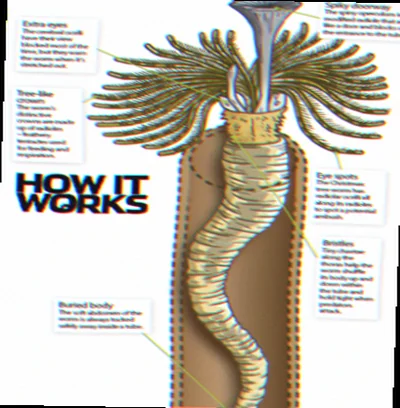
Christmas tree worms reproduce through broadcast spawning, releasing eggs and sperm into the water column for external fertilization. This typically occurs in response to lunar cycles and water temperature, often multiple times a year. Successful fertilization leads to free-swimming larvae that eventually settle and metamorphose into new worms, attaching themselves to coral reefs. Understanding their reproductive cycle is crucial for coral reef conservation efforts.
What is Christmas tree worm reproductive cycles?
The reproductive cycle of Christmas tree worms (Spirobranchus giganteus) is a fascinating process centered around broadcast spawning. This means they release their eggs and sperm directly into the surrounding water, relying on external fertilization. The timing of spawning is heavily influenced by environmental cues, primarily lunar phases and water temperature, and can occur multiple times throughout the year. Successful fertilization results in a planktonic larval stage before settlement and metamorphosis into a new, sessile worm.
Key Characteristics Overview
| Characteristic | Details |
|---|---|
| Size | Typically 3-4 cm (1.2-1.6 inches) in height, with spiral crowns up to 1 cm (0.4 inches) in diameter. |
| Habitat Depth | 3-30 meters (10-100 feet), though occasionally found deeper. |
| Location | Tropical and subtropical coral reefs in the Indo-Pacific region, Caribbean Sea, and parts of the Atlantic Ocean. Common locations include the Great Barrier Reef, Red Sea, and Florida Keys. |
| Diet | Plankton and microscopic organic matter filtered from the water column using their radioles (the "Christmas tree" branches). |
Behavior and Adaptations
- Survival mechanisms: Rapid retraction into their coral tubes when disturbed, protecting them from predators and physical damage. They also secrete a mucus coating for protection.
- Feeding behavior: They are filter feeders, extending their brightly colored radioles to capture plankton and other organic particles. Cilia on the radioles create a current that draws food towards the worm's mouth.
- Reproduction: Breeding is primarily tied to lunar cycles, with mass spawning events often occurring around full or new moons. They are hermaphrodites, possessing both male and female reproductive organs, but typically cross-fertilize with neighboring worms.
- Movement: Sessile as adults, permanently attached to coral. Limited movement involves retraction and extension within their calcareous tubes.
- Communication: While not definitively proven, some research suggests chemical signaling may play a role in coordinating spawning events. The bright coloration may also serve as a visual cue.
- Predators and defense: Predators include nudibranchs (sea slugs), fish, and some crustaceans. Their rapid retraction into the tube is their primary defense mechanism, along with the hard calcareous structure of the tube itself.
Common Misconceptions and Facts
Myth 1: Christmas tree worms are harmful to divers. Fact: They are completely harmless to humans. While their tubes can be brittle, they don't sting or bite.
Myth 2: The "Christmas tree" spirals are their bodies. Fact: The spirals are actually radioles, feathery appendages used for feeding and respiration. The actual worm body resides within the protective tube.
Myth 3: Christmas tree worms only live on coral. Fact: While they are most commonly found on living coral, they can also colonize dead coral skeletons and even certain rock formations.
Myth 4: All Christmas tree worms are brightly colored. Fact: While many exhibit vibrant hues of blue, green, orange, and yellow, coloration can vary depending on the species and environmental factors.
Frequently Asked Questions (FAQ)
Can Christmas tree worm reproductive cycles survive in shallow water?
Christmas tree worms are generally found in relatively shallow waters (3-30 meters), but their survival in significantly shallower or deeper environments is limited. The primary constraint is pressure. They are adapted to the specific hydrostatic pressure of their typical depth range. Moving to shallower waters causes decompression stress, damaging their tissues and disrupting physiological processes. Conversely, extreme depths present pressures they haven't evolved to withstand. Temperature fluctuations and increased UV radiation in shallower waters also pose threats. While some limited tolerance exists, prolonged exposure to drastically different conditions is usually fatal.
How does Christmas tree worm reproductive cycles find food in the deep ocean?
Christmas tree worms don't actively 'find' food in the deep ocean; they rely on the currents to bring food *to* them. Their radioles are highly efficient filter-feeding structures. The feathery branches create a localized current as cilia beat rhythmically, drawing in water containing phytoplankton, zooplankton, and dissolved organic matter. Mucus secreted by the radioles traps these particles, which are then transported to the worm's mouth. They are strategically positioned on coral reefs where water flow is typically strong, maximizing their access to food particles. The bright coloration of the radioles may also attract certain prey organisms.
Is Christmas tree worm reproductive cycles dangerous to humans?
Christmas tree worms pose absolutely no danger to humans. They are sessile organisms, meaning they are permanently attached to a substrate and cannot move to attack or defend themselves. Their tubes are brittle and can break if touched, but they do not sting, bite, or secrete any harmful substances. Divers often admire their vibrant colors and intricate structures. The primary concern for divers is to avoid damaging the coral reefs where these worms reside, as coral health is essential for their survival. Accidental breakage of a worm's tube is unlikely to harm the worm significantly, as they can regenerate damaged radioles.
What environmental factors impact Christmas tree worm reproductive success?
Several environmental factors significantly influence the reproductive success of Christmas tree worms. Water temperature is critical; spawning is typically triggered by warmer temperatures. Lunar cycles play a major role, with mass spawning events often coinciding with full or new moons. Water quality is also essential; pollution and sedimentation can negatively impact larval development and settlement. Coral health is paramount, as the worms rely on coral for both habitat and potentially for cues related to spawning. Ocean acidification, caused by increased carbon dioxide levels, can weaken coral skeletons and indirectly affect worm populations. Finally, strong storms or currents can disrupt spawning events and disperse larvae away from suitable settlement sites.
How long do Christmas tree worm larvae survive in the plankton?
The planktonic larval stage of Christmas tree worms is relatively short, typically lasting between 24 to 72 hours. During this time, the larvae are free-swimming and rely on their yolk reserves for energy. They are vulnerable to predation by zooplankton and other marine organisms. Successful settlement and metamorphosis depend on finding a suitable substrate - typically a healthy coral colony - and attaching themselves securely. The short larval duration necessitates precise timing of spawning events to coincide with favorable environmental conditions and maximize the chances of larval survival and successful recruitment.