What is Bonney upwelling seabird foraging behaviour?
Bonney upwelling seabird foraging behaviour refers to the intricate and often highly efficient ways in which seabirds utilize the Bonney upwelling, a significant marine phenomenon located off the coast of South Australia. This upwelling brings cold, nutrient-dense water from the deep ocean to the surface, creating a highly productive feeding ground that attracts a rich array of prey species. Seabirds in this region have evolved specific foraging techniques, including specialized diving abilities, aerial reconnaissance, and flocking behaviours, to capitalize on the abundant food resources made available by this localized oceanic process.
Key Characteristics Overview
| Characteristic | Details |
|---|---|
| Size | Variable, ranging from small terns (e.g., Little Tern, 20-25 cm length) to larger shearwaters and albatrosses (e.g., Wandering Albatross, wingspan up to 3.5 meters). |
| Habitat Depth | Foraging occurs primarily at the surface or during shallow dives (e.g., penguins, shearwaters, petrels often dive to 10-50 meters, with some species capable of deeper dives). The upwelling itself originates from depths exceeding 100 meters. |
| Location | Specifically within the waters influenced by the Bonney upwelling, primarily off the coast of southwestern Victoria and southeastern South Australia, within the Great Australian Bight. |
| Diet | Diverse, depending on the seabird species. Includes small fish (e.g., pilchards, anchovies), squid, crustaceans (e.g., krill, amphipods), and other zooplankton that are brought to the surface by the upwelling. |
Behavior and Adaptations
- Survival mechanisms: Seabirds in this region possess adaptations for efficient locomotion in water and air. This includes streamlined bodies, webbed feet for propulsion, and specialized wing structures for gliding and sustained flight. Many species have salt glands to excrete excess salt, allowing them to drink seawater.
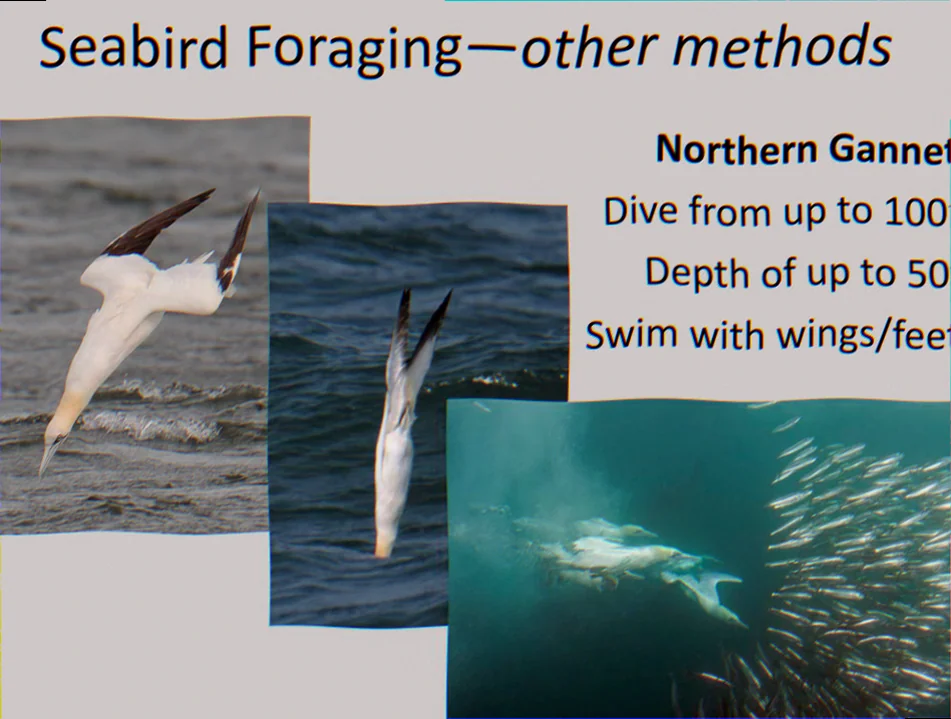
- Feeding behavior: Foraging strategies are diverse. Surface feeders, like albatrosses and petrels, often follow fishing vessels or scavenge on floating prey. Plunge-divers, such as terns and some shearwaters, spot prey from the air and dive headfirst into the water. Pursuit-divers, like penguins (though not typical of the Bonney upwelling as a primary habitat, related species might forage in similar conditions), use their wings to "fly" underwater. They often forage in flocks, which can help locate prey and deter predators.
- Reproduction: Breeding typically occurs on nearby islands or coastal areas with access to the rich foraging grounds. Colonies can be large, and reproductive success is closely tied to the availability of food during chick-rearing periods.
- Movement: Seabirds are highly mobile, undertaking extensive migrations to reach productive feeding areas like the Bonney upwelling. Their flight capabilities allow them to cover vast distances efficiently, and many are adapted for long periods at sea.
- Communication: While not reliant on bioluminescence like deep-sea creatures, seabirds communicate through vocalizations, especially during breeding seasons and within colonies. Visual cues and aerial displays are also important for social interactions and courtship.
- Predators and defense: Natural predators include larger seabirds of prey (e.g., skuas), sharks, and seals. Defense mechanisms include rapid flight, diving into water, and communal vigilance within flocks. Nesting on predator-inaccessible islands provides protection for eggs and chicks.
Common Misconceptions and Facts
Myth 1: All seabirds that visit the Bonney upwelling are permanent residents. Fact: Many species are migratory, timing their visits to coincide with peak prey availability driven by the upwelling, and may travel thousands of kilometers to reach these feeding grounds.
Myth 2: Seabirds are solely dependent on surface prey. Fact: While many forage at the surface, species like shearwaters and petrels are adept at diving to considerable depths to catch fish and squid brought closer to the surface by the upwelling.
Myth 3: The Bonney upwelling is a static food source year-round. Fact: The intensity and predictability of the upwelling can fluctuate annually due to changes in wind patterns and oceanographic conditions, impacting seabird foraging success and distribution.
Frequently Asked Questions (FAQ)
Can Bonney upwelling seabird foraging behaviour survive in shallow water?
The term "Bonney upwelling seabird foraging behaviour" refers to the actions of seabirds exploiting the upwelling, not a distinct species that lives in the upwelling itself. Seabirds are adapted to surface and near-surface marine environments. While they may dive to forage, they are not deep-sea creatures. They breathe air and return to the surface regularly. Therefore, the concept of them "surviving in shallow water" is a misapplication; they thrive in the marine environment where the upwelling occurs, which includes surface waters and accessible depths for foraging, but they are not adapted to the extreme pressures of the deep ocean where upwellings originate.
How does Bonney upwelling seabird foraging behaviour find food in the deep ocean?
Seabirds themselves do not forage *in* the deep ocean; rather, they exploit the *effects* of the deep ocean's nutrient-rich waters being brought to the surface by the Bonney upwelling. They find food by employing a combination of excellent eyesight to spot prey from the air or water surface, and by following cues like the presence of other feeding seabirds or marine mammals. Specialized species may use their sense of smell to detect prey, and their diving abilities allow them to pursue fish and squid that have been drawn up from deeper waters. The upwelling concentrates prey species, making them easier for seabirds to locate in the surface and near-surface layers.
Is Bonney upwelling seabird foraging behaviour dangerous to humans?
Bonney upwelling seabird foraging behaviour, in itself, poses no danger to humans. Seabirds are wild animals and, like all wildlife, should be observed from a respectful distance. They are not aggressive towards humans and generally avoid contact. The primary risks associated with seabirds are indirect, such as potential collisions with vessels if they are attracted to fishing activities, or the spread of avian diseases, though the latter is rare and typically associated with specific outbreaks. Encounters are safe and offer a valuable opportunity to appreciate their ecological role.